 WhichBroker
Score breakdown
Scores follow our public methodology — fees 30%, platforms 20%, trust 25%, markets 15%, support 10%. How we score
What we like
- Regular proof-of-reserves reviews (BTC 102.9% in the June 2026 snapshot)
- Proof-of-reserves audits published regularly
- Responsive human support, rare in crypto
What to watch
- Fees higher than Binance/Bybit for casual volumes
- Instant-buy widget notably more expensive than Kraken Pro
- Fewer exotic altcoins than offshore rivals
The security record is the product
Crypto exchanges compete on coins, fees and features. Kraken competes on a different metric: more than fourteen years of continuous operation without an exchange collapse or a hack that cost customers their funds. The record is not spotless — a 2024 bug exploited by a security firm drained about $3 million from Kraken’s own treasury (later returned), and in April 2026 Kraken disclosed that two support employees had improperly viewed data on around 2,000 accounts; both are covered in Is Kraken safe?. In an industry that has watched Mt. Gox, FTX and a long list of smaller venues take customer funds down with them, that record is not a marketing line — it is the single most important fact about the platform, and the reason our trust score of 9.5 is the highest we award any crypto exchange.
The record is not luck. Kraken keeps the large majority of client assets in air-gapped cold storage, runs an around-the-clock security operations team, and — critically — publishes regular proof-of-reserves audits that let you cryptographically verify your balance is included in the exchange’s attested holdings. Add regulation across US state licensing regimes, FCA registration in the UK and MiCA authorization in the EU, and Kraken operates with more regulatory surface area than almost any competitor.
Who it fits
Kraken is the exchange we point to for three profiles: first-time buyers in the US and Europe who want a venue that will still exist next cycle; security-conscious holders moving meaningful sums; and anyone who has been burned by ticket-bot support elsewhere — Kraken still staffs humans, 24/7, and it shows in an 8.8 support score.
Who should look elsewhere: fee-sensitive high-frequency traders and altcoin hunters. Kraken lists 200+ cryptocurrencies — a curated shelf, vetted more conservatively than the 300–1,300+ listings at OKX or Binance — and its taker fees start above theirs.
Opening an account and making the first buy
Registration follows the standard KYC path: email, identity document, address verification. Approval for basic tiers is typically fast; higher funding limits require more documentation. From a $1 equivalent minimum, you can start with pocket change.
Here is the one decision that determines how much you pay, and most beginners get it wrong: Kraken operates two interfaces with two very different price tags.
- Kraken (the simple app/web interface) — clean, guided, built around “Buy,” recurring purchases and an uncluttered portfolio view. Convenient, but the all-in cost of an instant buy (fee plus spread) is markedly higher.
- Kraken Pro — the full trading terminal: order books, limit orders, charting, API access. Same account, same funds, fees from 0.40% maker / 0.80% taker at the entry tier (since 9 July 2026), falling with 30-day volume.
The practical advice writes itself: even as a beginner, place orders through Kraken Pro. The interface looks intimidating for about ten minutes; a simple market or limit order there routinely costs a fraction of the instant-buy widget. Verify current fee schedules on the platform’s site, as tiers and promotions change.
Fees, honestly
| Action | Typical cost |
|---|---|
| Kraken Pro spot trade | 0.40% maker / 0.80% taker at entry tier, decreasing with volume |
| Instant buy (simple interface) | 1% fee plus a spread built into the price |
| Card purchases / some funding routes | additional processing fees |
| Crypto withdrawals | network-dependent flat fees |
| Fiat deposits/withdrawals | free to modest, method- and currency-dependent |
Against Binance’s 0.1% headline spot fee, Kraken Pro’s entry tier is 4× more expensive for a maker and 8× for a taker — real money for active traders, rounding error for a monthly accumulator. That premium is what funds the security posture and the humans answering support tickets; whether it is worth paying is the entire Kraken decision, and it is why fees score 8.0 while trust scores 9.5. The full head-to-head lives in Binance vs Kraken. Every tier, deposit and withdrawal charge for UK users is in Kraken fees explained.
Funding routes: where Kraken quietly excels
Fiat rails are an underrated differentiator, and Kraken’s are among the best in the industry. Depending on your region, the exchange supports bank transfers in USD, EUR, GBP, CAD, CHF, AUD and JPY through named domestic schemes — SEPA in Europe, FedWire and ACH-style routes in the US, Faster Payments in the UK — most of them free or near-free to receive and cheap to withdraw. For a European user, funding in euros via SEPA and trading EUR-quoted pairs directly avoids the hidden conversion step that inflates costs on exchanges which only really operate in USD or stablecoins.
Two practical notes. First, match the funding method to your timeline: bank transfers take hours to a couple of days but cost little, while card rails are instant and priced accordingly. Second, withdrawal fees and minimums differ per currency and method — worth checking on the platform’s site before you plan regular transfers, since a monthly accumulator and a one-off buyer optimize differently.
Beyond spot: staking, margin, futures
Kraken’s product depth is broader than its conservative reputation suggests. Staking is integrated and straightforward for major proof-of-stake assets. Margin trading and futures exist where permitted — availability varies sharply by country and by US state, so check what your jurisdiction actually unlocks before planning a strategy around it. The curated listing policy means new narrative tokens arrive later than on offshore venues; for some users that lag is a bug, for Kraken’s core audience it is a filter.
Custody: the caution that applies even here
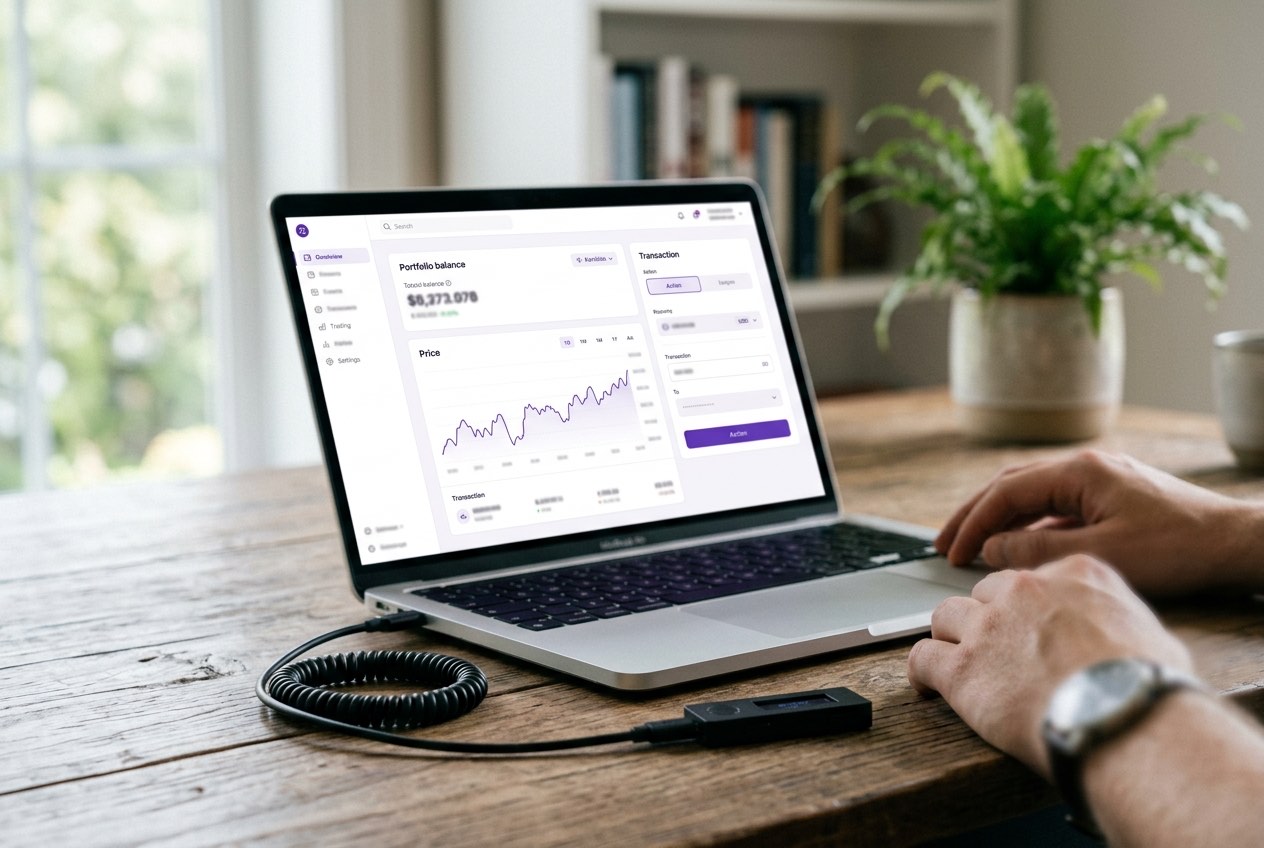
The strongest exchange security record does not change the structural fact of custodial risk: assets on any exchange are a claim on that exchange, not coins in your pocket. Kraken’s proof-of-reserves makes that claim more verifiable than most — and you should still treat the platform as a trading and accumulation venue, not a vault. Holdings you don’t actively trade belong in self-custody on a hardware wallet, with the exchange holding only what your next trades need. Enable a hardware security key, withdrawal address allowlisting and the global settings lock; Kraken supports all three.
Limitations, plainly
- Price. The instant-buy interface is expensive, and even Pro fees trail the offshore discount venues.
- Curated altcoin shelf. If your strategy involves being early to exotic listings, Kraken will regularly not have the ticker.
- Regional feature gaps. Futures, margin and certain staking products are geo-fenced; two users in different countries can see meaningfully different platforms.
- No demo environment — a minor gap given the $1 minimum makes a “real-money demo” nearly free, but Bybit offers a proper testnet for derivatives practice.
Verdict
Kraken is what a crypto exchange looks like when the design brief starts with “still standing in ten years.” You pay a visible premium over discount venues and accept a shorter altcoin menu; in exchange you get the industry’s best security record, verifiable reserves, heavyweight regulation across the US, UK and EU, and support that answers. For most people holding meaningful money, that is the correct trade — made even better by routing every order through Kraken Pro and self-custodying what you don’t trade.
8.8 / 10. Active traders optimizing fees should compare Binance (Binance vs Kraken); derivatives specialists should look at Bybit (Kraken vs Bybit).
Frequently asked questions
Is Kraken regulated in the UK?
Partly. Kraken's UK crypto exchange, Payward Limited, is registered with the FCA as a cryptoasset business under the Money Laundering Regulations, firm reference 928768. That covers anti-money-laundering standards, not conduct or capital rules, and it brings no FSCS or Financial Ombudsman protection for crypto. In the EU, Kraken holds a MiCA licence from the Central Bank of Ireland, granted in June 2025.
What are Kraken's fees?
It depends on the interface. Instant buys in the Kraken app or on kraken.com cost 1% plus a spread built into the price. Kraken Pro, on the same account, charges 0.40% maker and 0.80% taker at the entry tier since 9 July 2026, falling with 30-day volume. Even beginners pay less by placing simple market or limit orders through Kraken Pro.
How do I deposit and withdraw pounds on Kraken?
By Faster Payments. Depositing GBP that way is free, while debit card funding costs £0.25 plus 3.75%. Withdrawing pounds by Faster Payments costs £1.95, with a £5 minimum and near-instant processing; SWIFT withdrawals cost £13 and take two to five business days. After a card or PayPal purchase, Kraken can hold withdrawals for 72 hours as a security measure.
Has Kraken ever been hacked?
There is no public record of a hack that cost Kraken clients their crypto since it was founded in 2011. There have been incidents: in June 2024 a bug let a security firm withdraw about $3 million from Kraken's own treasury, later returned, and in April 2026 Kraken disclosed that two support employees had improperly viewed data on around 2,000 accounts.
Can I trade futures on Kraken in the UK?
Not as a retail client. Kraken's UK restrictions state that UK retail clients cannot trade derivatives, in line with the FCA's ban on crypto derivatives for retail consumers; only clients categorised as elective professionals may qualify. Spot margin on Kraken Pro is treated differently, and margin, futures and some staking products vary by country, so check what your jurisdiction unlocks.

Open the official site — check the current terms for your country before depositing.